



Introduction
Consumers today want more than just stylish and affordable clothing. They increasingly want to know where products come from, how they are made, what materials they contain, and what impact they have on people and the planet.
At the same time, brands face growing pressure from regulators, investors, retailers, and consumers to demonstrate transparency throughout their supply chains.
As a result, fashion traceability has become one of the most important topics in the global apparel industry.
Traceability is no longer simply a sustainability initiative. It is rapidly becoming a business necessity.
Whether driven by sustainability commitments, responsible sourcing requirements, Digital Product Passports (DPP), due diligence regulations, or consumer expectations, organizations are increasingly expected to understand and disclose the journey of their products from raw material to end-of-life.
For fashion businesses, traceability provides the foundation for transparency, compliance, risk management, circularity, and consumer trust.
This guide explains what fashion traceability is, why it matters, how it works, the technologies enabling it, and how businesses can prepare for a future where transparency is no longer optional.
What is Fashion Traceability?
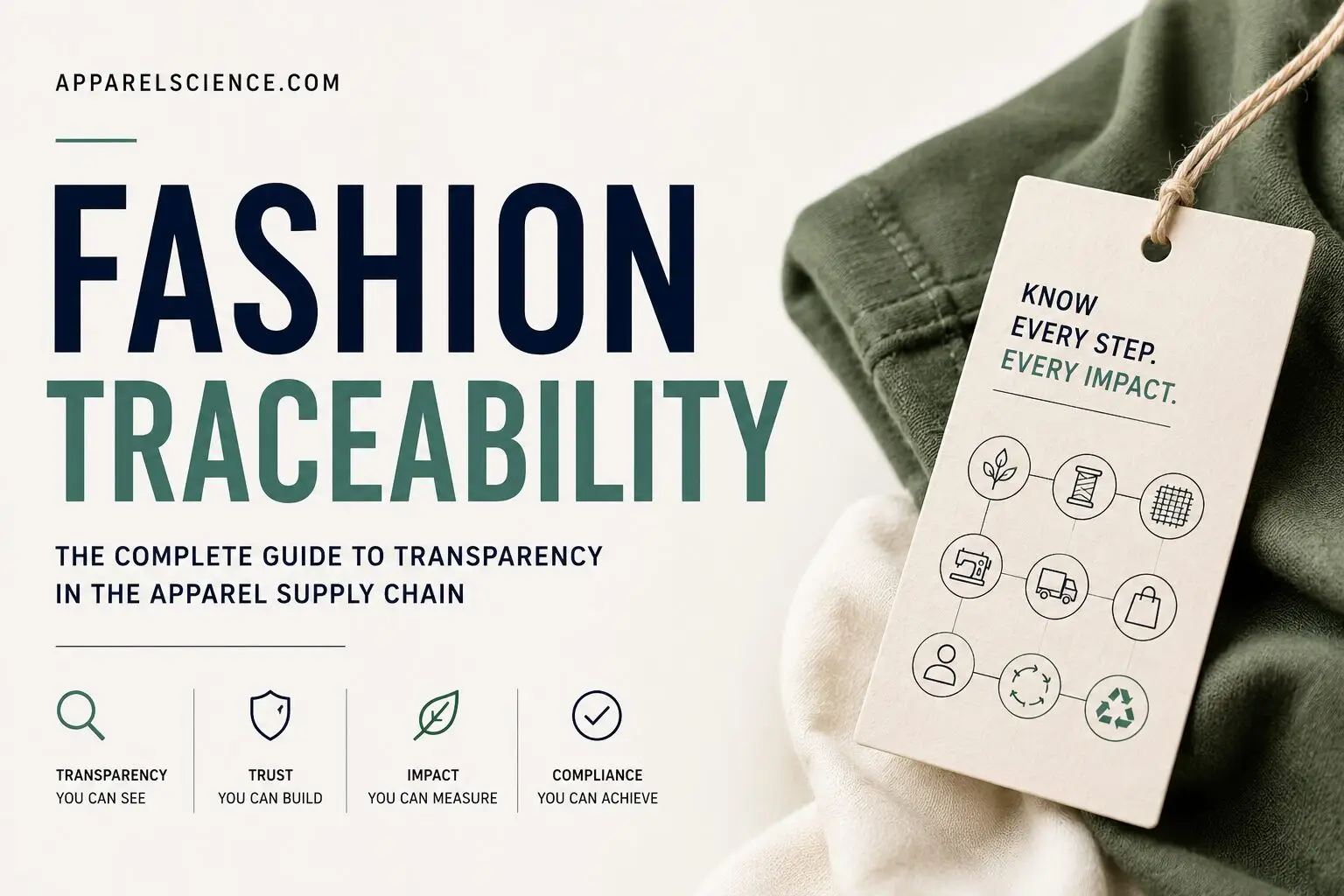
Fashion traceability refers to the ability to track, verify, and document the journey of a product and its materials throughout the supply chain.
In simple terms, traceability helps answer critical questions such as:
- Where did the raw materials originate?
- Which suppliers handled the product?
- Where was the fabric manufactured?
- Which factory produced the garment?
- Can sustainability claims be verified?
- What happens to the product at the end of its life?
Unlike traditional supply chain visibility, which often focuses only on direct suppliers, traceability seeks to connect information across the entire value chain.
A fully traceable garment provides visibility from fiber to fashion and ultimately to reuse, resale, or recycling.
Why Fashion Traceability Matters
The fashion industry operates through one of the world’s most complex supply chain networks.
A single garment may involve multiple countries, suppliers, processing facilities, logistics providers, retailers, and recycling partners before reaching its final destination.
This complexity creates significant challenges.
Sustainability Verification
Consumers increasingly expect brands to prove sustainability claims rather than simply communicate them.
Traceability enables organizations to verify:
- Organic materials
- Recycled content
- Responsible sourcing practices
- Environmental performance
- Ethical labor standards
Regulatory Compliance
Emerging regulations increasingly require companies to demonstrate transparency and due diligence throughout their supply chains.
Organizations with strong traceability systems will be better positioned to meet future compliance requirements.
Risk Management
Traceability helps identify and mitigate risks such as:
- Forced labor
- Child labor
- Unauthorized subcontracting
- Environmental violations
- Counterfeit products
- Supply chain disruptions
Consumer Trust
Transparency builds credibility.
When consumers can access reliable product information, confidence in brands and sustainability claims increases significantly.
Why Fashion Traceability Is So Difficult
When consumers purchase a garment, they typically see only one name—the brand.
What they do not see is the complex global network behind that product.
A simple cotton T-shirt may pass through numerous organizations and several countries before reaching a store shelf.
The cotton may be grown in one country, spun into yarn in another, transformed into fabric elsewhere, dyed and finished in a different location, and finally assembled into a garment before being shipped to retail markets around the world.
At every stage, information can be lost, fragmented, duplicated, or disconnected.
This is one of the biggest challenges facing the fashion industry today.
The challenge is not generating data. Every stage already generates enormous amounts of information.
The challenge is keeping that information connected.
Fashion traceability creates a digital thread that links materials, suppliers, manufacturing processes, environmental impacts, certifications, and compliance information throughout the product lifecycle.
Without traceability, sustainability claims become difficult to verify.
With traceability, brands gain visibility, consumers gain confidence, and supply chains become more transparent and accountable.
Where Traceability Data Is Generated
| Supply Chain Stage | Key Information Generated |
|---|---|
| Raw Materials | Origin, certifications, farming practices, recycled content |
| Fiber & Yarn Production | Material composition, supplier information, production records |
| Textile Manufacturing | Chemical management, water use, energy consumption |
| Garment Manufacturing | Factory information, labor standards, quality records |
| Distribution & Logistics | Transportation routes, warehousing and logistics data |
| Retail | Product movement and market destination |
| Consumer Use | Care instructions, durability and repair information |
| Circularity | Reuse, resale and recycling pathways |
Key Insight:
Every stage generates valuable information. Fashion traceability is the process of connecting this information into one transparent and verifiable product story.
How Traceable Is Your Supply Chain?
Fashion traceability exists at different levels of maturity.
Level 1 – Supplier Visibility
Understanding who manufactures your products.
Level 2 – Material Traceability
Identifying where raw materials originate.
Level 3 – Process Traceability
Tracking production activities across multiple supply chain stages.
Level 4 – Impact Traceability
Tracking environmental and social performance indicators throughout the supply chain.
Level 5 – Product-Level Transparency
Sharing product-specific information with stakeholders through digital platforms and traceability systems.
Organizations operating at higher levels of traceability generally have stronger transparency, lower risk exposure, and better regulatory readiness.
The Technologies Making Fashion Transparency Possible
Modern traceability depends on a combination of technologies rather than a single solution.
QR Codes
Allow users to access product information instantly through smartphones and digital platforms.
RFID
Supports inventory visibility and product tracking throughout supply chains.
Blockchain
Can support secure and auditable transaction records across supply chains.
Digital Product Passports (DPP)
Provide structured product information accessible throughout the product lifecycle.
Artificial Intelligence
Supports supply chain analysis, anomaly detection, and traceability insights.
IoT and Smart Sensors
Collect real-time data from facilities, equipment, and logistics operations.
Digital Twins
Create virtual representations of products and supply chains to improve visibility and decision-making.
Benefits of Fashion Traceability
For Brands
- Stronger consumer trust
- Improved sustainability reporting
- Better risk management
- Enhanced supply chain visibility
- Greater regulatory readiness
For Manufacturers
- Stronger customer relationships
- Better operational control
- Improved compliance management
- Competitive differentiation
For Retailers
- Improved transparency
- Reduced compliance risks
- Enhanced customer engagement
For Consumers
- Informed purchasing decisions
- Greater confidence in sustainability claims
- Increased transparency
For Regulators
- Easier verification
- Improved compliance monitoring
- Greater accountability
Common Challenges to Implementing Traceability
Despite its benefits, traceability is not easy to implement.
Common challenges include:
Fragmented Supply Chains
Many apparel supply chains involve multiple tiers of suppliers spread across different countries.
Data Collection Complexity
Collecting accurate information from multiple stakeholders can be difficult.
Limited Visibility Beyond Tier 1
Many organizations have visibility into direct suppliers but limited knowledge of upstream activities.
Technology Integration
Integrating traceability systems with existing ERP, PLM, and compliance platforms can require significant effort.
Data Accuracy and Verification
Traceability systems are only as reliable as the information entered into them.
Supplier Engagement
Successful traceability requires collaboration across the entire value chain.
Why Traceability Matters in 2026 and Beyond
Several global trends are accelerating the adoption of traceability systems:
Digital Product Passports (DPP)
Future product transparency requirements are expected to increase demand for traceable product information.
Due Diligence Regulations
Organizations increasingly need visibility into environmental and human rights risks.
Sustainability Reporting
Stakeholders expect reliable sustainability data rather than marketing claims.
Circular Economy
Traceability supports repair, reuse, resale, and recycling initiatives.
Responsible Sourcing
Brands increasingly seek evidence-based sourcing decisions.
Consumer Expectations
Transparency is becoming a key factor influencing purchasing decisions.
How Businesses Can Improve Traceability
Organizations looking to strengthen traceability should focus on six priorities:
1. Map the Supply Chain
Identify suppliers and facilities involved throughout the value chain.
2. Standardize Data Collection
Establish clear data requirements and reporting expectations.
3. Engage Suppliers
Build partnerships focused on transparency and collaboration.
4. Invest in Digital Tools
Adopt technologies that improve visibility and data management.
5. Verify Information
Use audits, certifications, and validation systems to improve confidence in data.
6. Prepare for Future Regulations
Develop systems capable of supporting future traceability and transparency requirements.
The Future of Fashion Traceability
The future of fashion will be increasingly transparent, digital, and data-driven.
Consumers will expect access to detailed product information. Regulators will require greater accountability. Brands will need stronger visibility into their supply chains. Manufacturers will need to demonstrate responsible production practices.
Traceability will become the foundation supporting sustainability, compliance, circularity, and consumer trust.
Organizations that invest in traceability today will be better positioned to compete in a future where transparency is not a competitive advantage—it is a basic expectation.
Conclusion
Fashion traceability is transforming the apparel industry.
It enables organizations to improve transparency, strengthen compliance, reduce risks, verify sustainability claims, and build trust with consumers and stakeholders.
As Digital Product Passports, due diligence regulations, sustainability reporting requirements, and circular economy initiatives continue to evolve, traceability will become increasingly important across the entire fashion ecosystem.
The future of fashion belongs to organizations that know their products, understand their supply chains, and can demonstrate that knowledge with confidence.
Because in the future of fashion, transparency is not just good practice—it is good business.