



Introduction
The fashion and textile industry is entering a new era of transparency, traceability, and accountability. For decades, products moved through complex global supply chains with limited visibility into their origins, environmental impacts, material composition, and end-of-life potential. Today, this is changing rapidly with the emergence of the Digital Product Passport (DPP).
Driven by the European Union’s sustainability agenda and the Ecodesign for Sustainable Products Regulation (ESPR), the Digital Product Passport is expected to become one of the most transformative developments in the history of the fashion industry. More than a compliance requirement, DPP represents a fundamental shift in how product information is created, managed, shared, and utilized throughout the product lifecycle.
The Digital Product Passport will enable stakeholders across the value chain—including brands, retailers, manufacturers, consumers, recyclers, regulators, and investors—to access standardized, reliable, and verifiable product information. This information may include material composition, country of origin, environmental footprint, repairability, durability, recycled content, chemical compliance, certifications, and end-of-life guidance.
For fashion brands, DPP offers an opportunity to strengthen consumer trust, enhance sustainability credentials, and improve supply chain transparency. For manufacturers and suppliers, it presents both challenges and opportunities, requiring improved data management, traceability systems, and collaboration across the value chain. For consumers, it promises greater visibility into the products they purchase and the impact those products have on people and the planet.
As global sustainability expectations continue to evolve, understanding Digital Product Passports is becoming essential for every organization operating within the fashion and textile ecosystem.
This comprehensive guide explains what the Digital Product Passport is, why it matters, how it will impact the fashion industry, and what businesses should do now to prepare for the future.
What is a Digital Product Passport (DPP)?
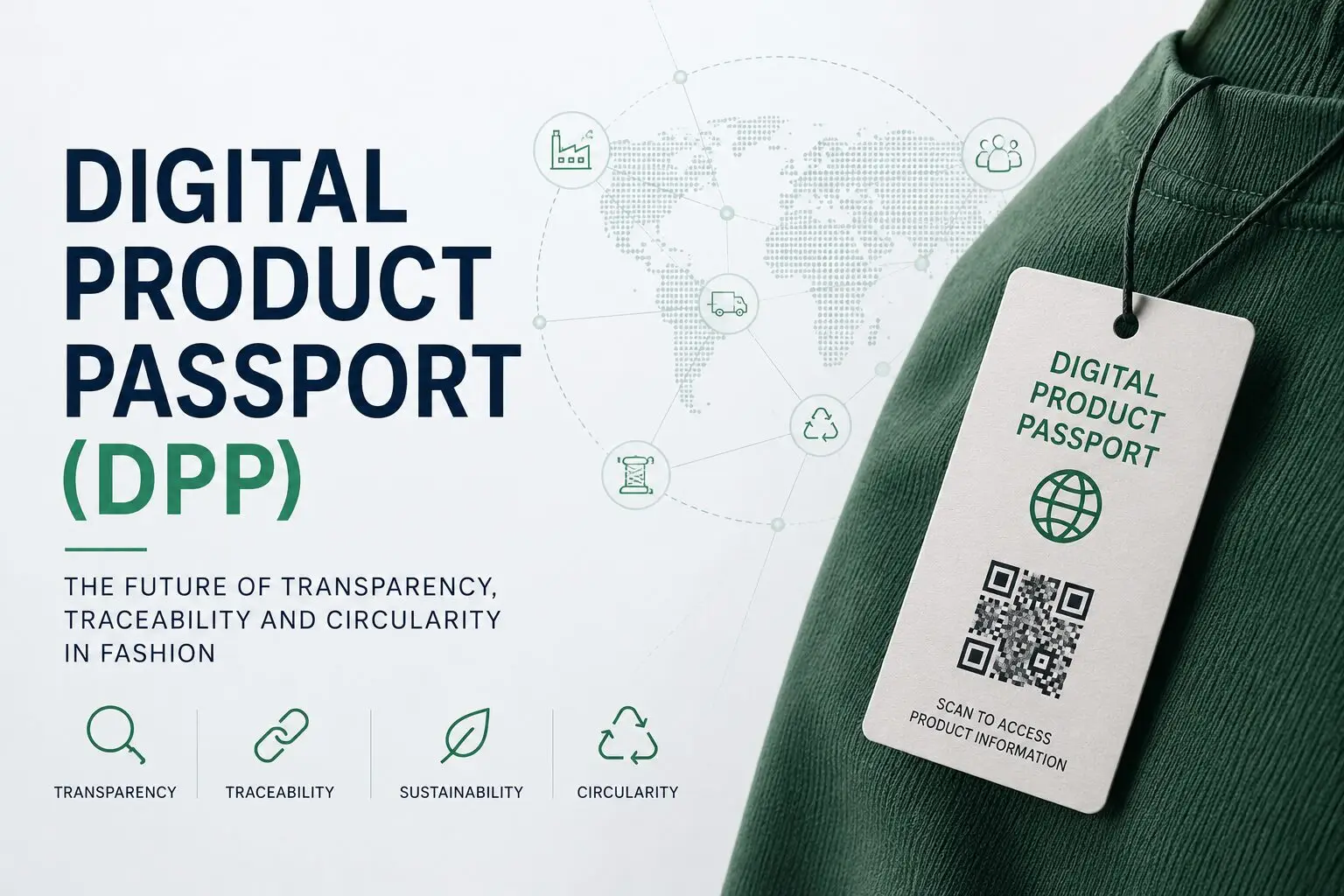
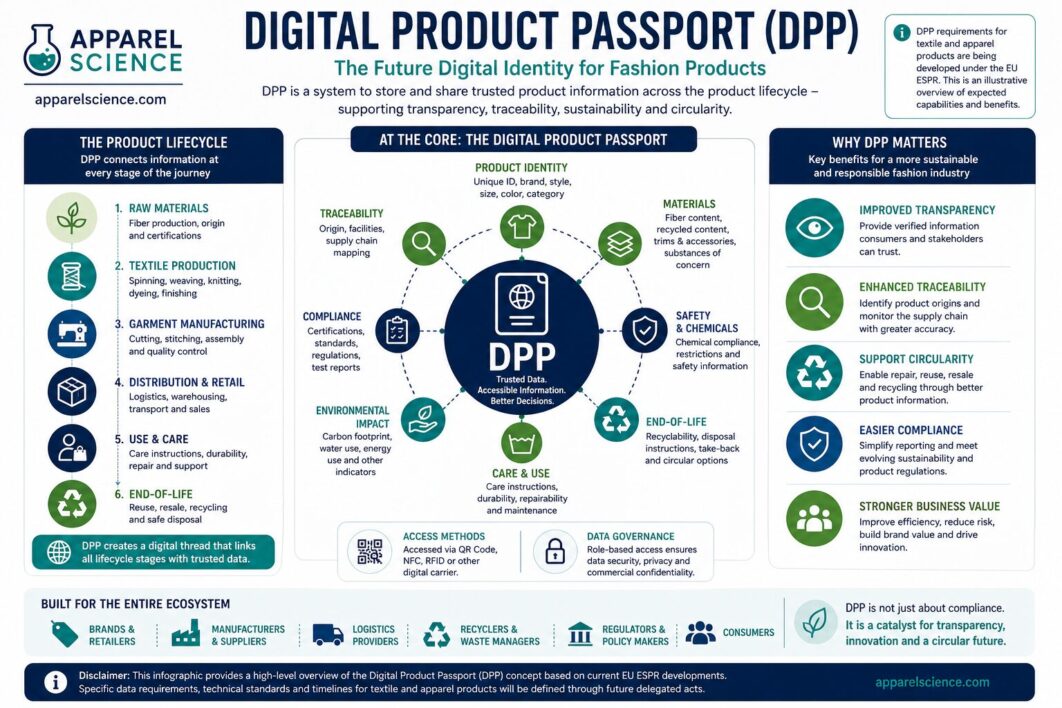
A Digital Product Passport (DPP) is a digital record containing structured information about a product throughout its lifecycle. It serves as a comprehensive repository of data that can be accessed electronically by different stakeholders through a digital identifier, such as a QR code, RFID tag, NFC chip, or other data carrier.
Think of the DPP as a digital identity card for a product. Just as a passport contains essential information about an individual, a Digital Product Passport contains critical information about a product’s origin, composition, sustainability performance, compliance status, and lifecycle characteristics.
Unlike traditional product labels, which are limited by physical space, a Digital Product Passport can store and provide access to extensive information that evolves throughout the product’s life.
Depending on future regulatory requirements and industry standards, a Digital Product Passport may contain information such as:
- Product identification and unique product codes
- Brand and manufacturer details
- Material composition and fiber content
- Recycled content percentages
- Country of origin and manufacturing locations
- Supply chain traceability information
- Environmental footprint indicators
- Chemical compliance data
- Product certifications and testing records
- Care and maintenance instructions
- Repairability information
- End-of-life recycling guidance
- Circularity and reuse recommendations
By making this information accessible and verifiable, DPP aims to improve transparency, support sustainability objectives, and facilitate the transition toward a more circular economy.
Why is the Digital Product Passport Important?
The fashion industry is one of the world’s most resource-intensive sectors. It consumes significant amounts of water, energy, raw materials, and chemicals while generating substantial waste and greenhouse gas emissions.
At the same time, stakeholders are demanding greater transparency.
Consumers increasingly want to know where their products come from and how they are made. Investors seek reliable ESG information. Regulators require stronger compliance and accountability. Brands are under pressure to demonstrate sustainability performance while managing increasingly complex global supply chains.
The Digital Product Passport addresses these challenges by creating a standardized mechanism for collecting and sharing product-related information.
The importance of DPP can be summarized through five key objectives:
1. Improving Supply Chain Transparency
Many fashion supply chains involve multiple tiers of suppliers across different countries. DPP enables greater visibility into sourcing, manufacturing, and processing activities throughout the value chain.
2. Supporting Sustainable Consumption
Consumers can make more informed purchasing decisions when they have access to verified information regarding materials, environmental impacts, and product durability.
3. Enabling Circular Economy Models
The transition from a linear “take-make-dispose” model to a circular economy requires detailed product information. DPP can support repair, resale, refurbishment, remanufacturing, and recycling initiatives.
4. Strengthening Regulatory Compliance
Governments and regulatory bodies increasingly require organizations to provide evidence of sustainability performance, product safety, and due diligence activities.
5. Building Consumer Trust
Transparent product information helps brands strengthen credibility and demonstrate commitment to responsible business practices.
The Regulatory Foundation Behind Digital Product Passports
Digital Product Passports are closely linked to the European Union’s broader sustainability and circular economy strategy.
The most significant legislative driver is the Ecodesign for Sustainable Products Regulation (ESPR), which establishes a framework for improving the environmental performance of products placed on the EU market.
Under ESPR, Digital Product Passports are expected to become a key mechanism for providing product-related information throughout the value chain.
The regulation aims to improve:
- Product durability
- Product repairability
- Product recyclability
- Resource efficiency
- Energy efficiency
- Circularity
- Transparency
- Environmental performance
Textiles and apparel have been identified among the priority product categories for future implementation requirements.
Although the legislation originates within the European Union, its implications extend far beyond Europe. Any company supplying products to the EU market may eventually need to comply with relevant Digital Product Passport requirements.
This means the impact will be felt across major apparel manufacturing hubs including Bangladesh, India, Vietnam, Pakistan, Türkiye, China, and other sourcing destinations.